Behcet’s Disease
Behcet’s disease/syndrome is also an autoimmune disease that causes intense and rare inflammation in the blood vessels of the patient. The individual can feel the sensation in the entire body.
History of the Behcet’s Disease
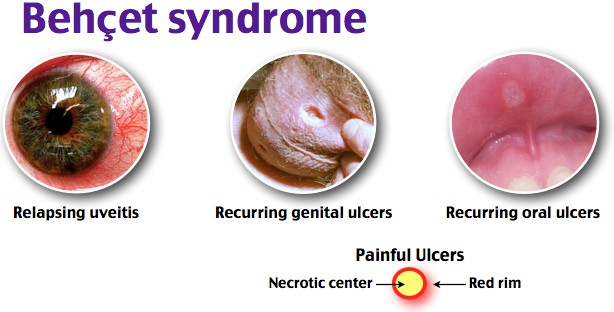
This disorder was first reported in the 1930s by a Turkish dermatologist, named Hulusi Behcet. He recognized the three primary signs of the Behcet’s Disease and these are canker sores, genital ulcers, and repetitive eye inflammation. Behcet’s disorder develops its marks in many parts of the body and mouth.
Causes of Behcet’s Disease
The actual cause of Behcet’s Disease is still unfamiliar; however, according to a report of the Johns Hopkins Medicine, there is an HLA-B51 gene in some patients with Behcet’s syndrome. Although the alone HLA-B51 gene cannot source the Behcet’s Disease in one’s body, it can give roots to this disorder. Moreover, according to the report, only 5% of the patients have exhibited to be familial and the syndrome is not contagious. However, scientists are still looking for the real cause, infection, or environmental reference for this disease.
Moreover, Behcet’s Disease mostly affects the people of the Mediterranean, the Middle East, and East Asia. According to the report of the American Behcet’s Disease Association (ABDA), in the United States, almost 16,000 to 20,000 cases of the rare Behcet’s Disease have appeared until now. However, in Turkey women are suffering from Behcet’s syndrome more than men, and this infection is common there. Moreover, Behcet’s Disease hit young people between the age of 20 to 30.
Diagnosis and Symptoms of Behcet’s Disease
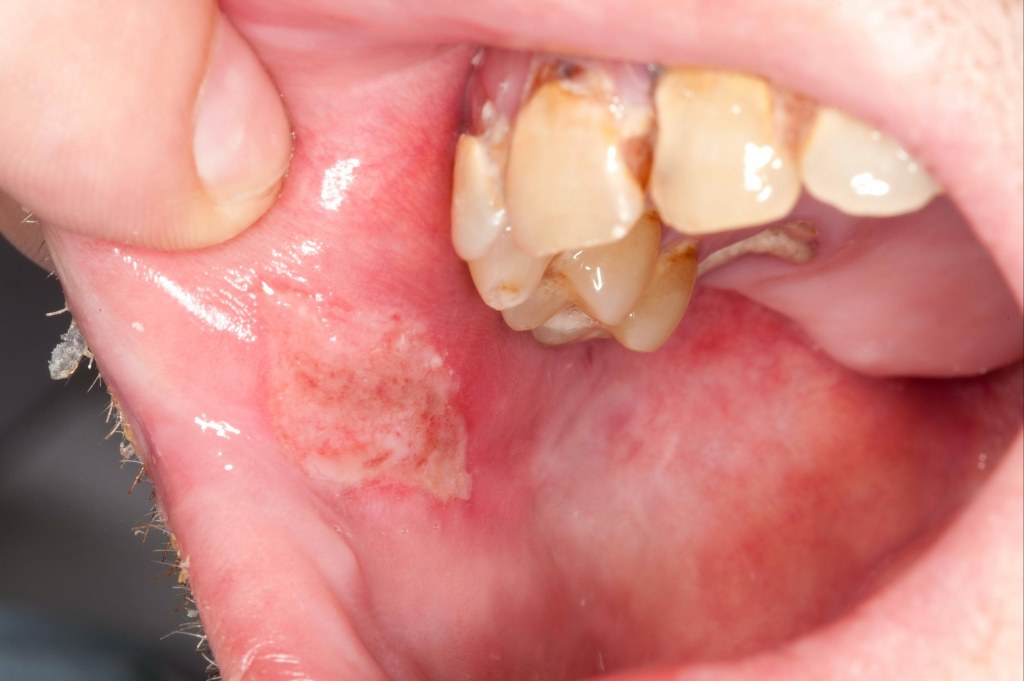
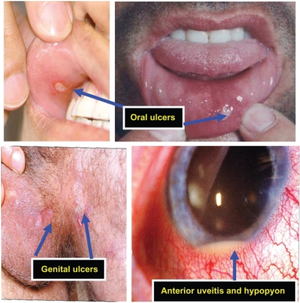
To diagnose Behcet’s Disease, the dentist and physician will first examine the patient’s oral health. He/she will look for the canker sores in the mouth and gums. The sore can be in a line on the roof of the mouth, gumline, or cheeks. This is one of the quickest and ordinary signs that may appear. Moreover, the individual will face trouble in speaking and chewing.
Moreover, doctors may diagnose Behcet’s syndrome by examining ulcers or sores in the genital area of a person. In appearance, they will be similar to the mouth sores, they will cause a deep or shallow lesion in the organ. Moreover, these genital sores will turn the border of the genital area red and rough.
Another symptom of Behcet’s Disease is inflammatory eyes. Some persons feel intense inflammation in the eyes. Moreover, Behcet’s syndrome also causes pain in the eyes, tears, redness, blurred vision, sensitivity to the light, and sometimes blindness. Thus, doctors can diagnose Behcet’s infection by looking into your eyes’ health.
Moreover, one more symptom of Behcet’s Disease is skin lesions. This condition will affect the skin area and cause pimples, ulcers, nodules, and tiny pop-up bumps on the affected area. This infection will require a pathergy test for screening the signs and syndrome.
Other symptoms of Behcet’s Disease is a pain in the joints, including ankles, knees, elbows, and hips. However, Behcet’s syndrome when hit the joints does not damage them permanently.
Moreover, Behcet’s Disease also causes inflammation in the veins of the patient. Such feelings can appear in any part of the body. It may develop a blood clot problem in the patient. It will affect the functioning of the lungs, brain, heart, and kidneys.
Treatment of Behcet’s Disease
Well, Behcet’s Disease does not have a treatment; however, the doctors may treat the above-mentioned symptoms and heal the internal organs. Moreover, the cure depends on the intensity of the syndrome and the damage it had caused. Therefore, doctors usually recommend the medications to cure the infections. Moreover, good oral health is necessary; thus, they will prescribe the patients a few hygiene products for the mouth. The person needs a healthy mouth, bacteria-free mouth, and a strong immune system to fight with Behcet’s Disease.
 Mouth Cancer Information