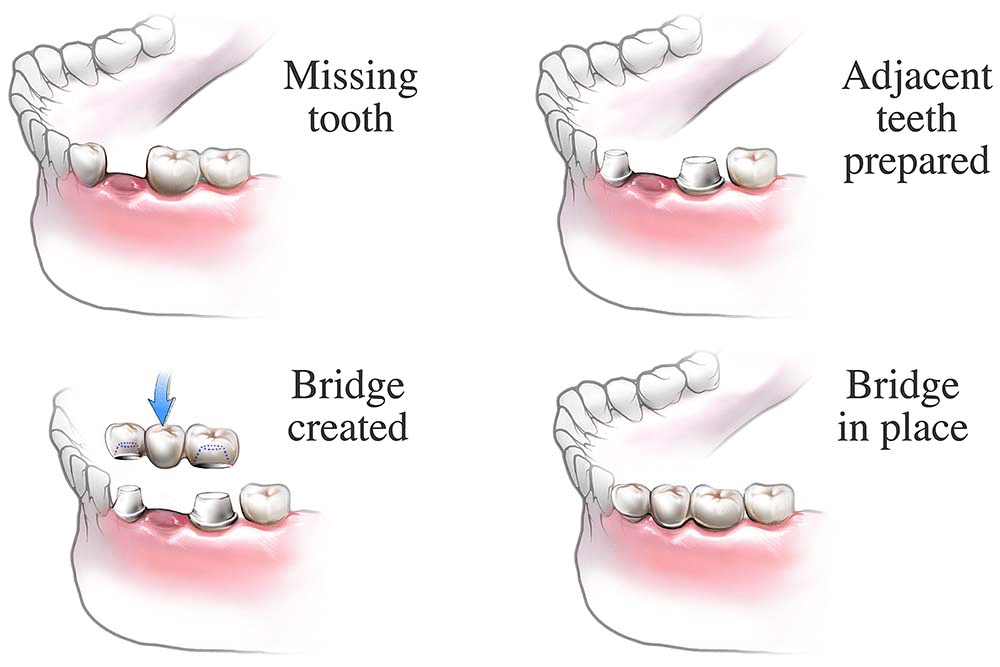
Even though dental bridges are designed to have a lifespan of up to several decades, they will need repair or replacement if there is any sign of damage. Dental bridges fill the gap between missing teeth by securing themselves between the spaces while being reinforced over the healthy teeth. Frequent dental appointments will provide you with an accurate analysis over time to determine your bridge’s state, as well as a scholarly opinion provided by your dental expert.
Causes of dental bridge failure
Failure of dental bridges may be caused by neglectful oral care. Structural damages may occur on the teeth’s porcelain or ceramic surface, supported by an underlying metal frame. The teeth used to anchor the bridge (abutment teeth) may incur bacterial damage and begin to decay if the bacteria is untreated, causing it to proliferate. The abutment teeth, though initially sturdy, may also lose their integrity and break over time.
Intrinsic dental damage may occur if the bridge’s metallic frame is compromised, causing breakage. Another type of damage may occur if the surface of the bridge is cracked, leaving exposure. The bridge may also bring discomfort if it doesn’t accurately patch the space it is intended to fix or maybe aesthetically unpleasant if its color sharply contrasts the surrounding teeth.

When do they need fixing?
Suppose you notice loose pieces of ceramic falling off in your mouth or notice surface breakage (cracks) when chewing or brushing, then it may be time to repair. However, it is not practical to see the decay of abutment teeth due to the bridge’s covering. However, decay might be evident if you experience sensitivity around the teeth and gums nearest to the dental bridge. While they offer excellent relief, dental bridges are only a temporary solution. They do hold up over time, though, and depending on how they are treated, they will generally remain intact from anywhere between 5 to 35 years.
Dental bridge repair
Beginning at the surface, your dental practitioner should be able to patch any small crack in the fractured coating. If the damage is escalated to the supporting teeth below, the bridge must be completely removed and the abutment teeth are then treated. A second bridge is then made and installed once the abutment teeth have been restored to a good state. If the abutment teeth are damaged beyond repair, they will have to be removed, and the spot is filled with implants to support the newly constructed bridge.
If you decide to forego this procedure, you can alternately fill the missing teeth and abutment teeth with surgical implants that are lodged directly into the jaw bone.
Caring for your new bridges
No bridge is self-healing, and the simple mechanics are dependent upon external maintenance to reinforce longevity. Neglecting to clean or brush your teeth with a good toothpaste at least twice daily encourages plaque, bacteria, and cavities to develop and spread on the abutment teeth rendering the underlying bridge support progressively weaker.
In any case, your dentist is the most equipped person to restore your broken bridges. So if you notice a problem and you want to reinforce your bridge before their tenures are completely burnt. Make your way to the office, where you will receive professional medical advice on the best possible restorative actions to bring out that confident smile.
 Mouth Cancer Information